

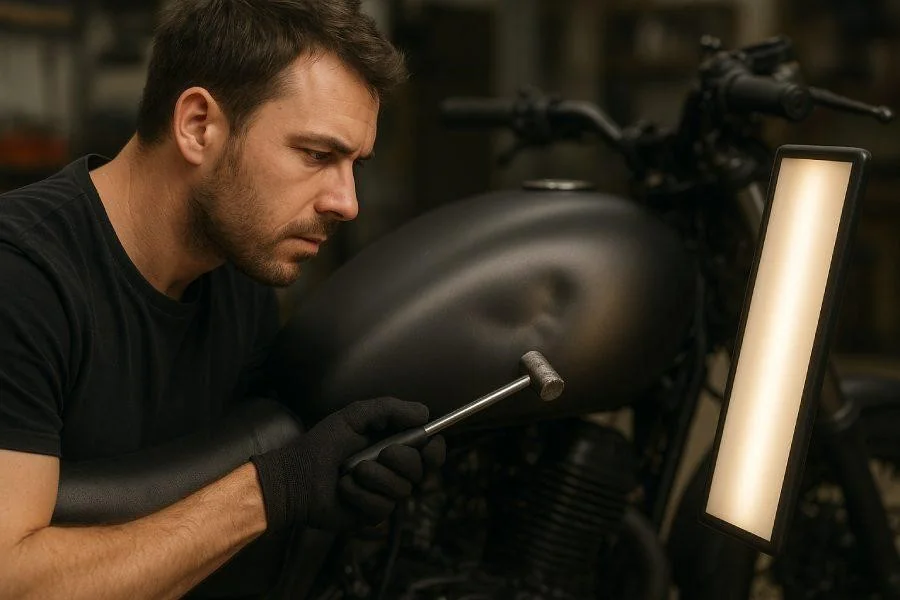
Motorcycle dents are a common challenge for riders, whether caused by minor accidents, road debris, or accidental drops. Understanding how different materials—metal, aluminum, or fiberglass—respond to impacts is essential for effective repair. From shallow surface dings to deeper dents affecting the tank, fenders, or fairings, knowing the right repair technique ensures both aesthetic restoration and structural integrity.
This complete guide explores the top motorcycle dent repair methods, including paintless dent removal, traditional filling and sanding, and specialized fiberglass repair, with insights relevant to motorcycle dent repair in Idaho. It also highlights essential tools, professional services, and preventative tips to maintain your motorcycle’s appearance while reducing the risk of future damage, making it a must-read for enthusiasts and riders alike.
Understanding Motorcycle Dents: Types and Causes
In the realm of motorcycle maintenance and restoration, understanding the nature of motorcycle dents is a fundamental step toward effective repair. Dents can manifest in various forms, from minor surface dents and creases to more severe metal dent damage or even frame deformation resulting from accidents. Common causes include low-speed impacts, accidental drops, road debris strikes, or collisions during motorcycle customization or aftermarket parts installation.
Different materials respond uniquely to dents: steel and aluminum panels, commonly found on Harley-Davidson and Yamaha Motor Company motorcycles, are susceptible to metal dent repair techniques, whereas modern bikes may include fiberglass fairing panels requiring motorcycle fiberglass repair. Surface dent repair of motorcycle body panels is critical, as unchecked dents can accelerate corrosion, further complicating motorcycle corrosion repair efforts.
Recognizing dent types—such as shallow dings versus deep indentations—affects the choice of repair method. For example, shallow dents may be resolved with paintless dent removal (PDR) while deeper dents might necessitate motorcycle body filler or even motorcycle body panel replacement.
Assessing the Damage: When to DIY and When to Seek Professional Help
Assessing motorcycle damage correctly is essential before choosing a repair method. For small dents or scratches, many riders use bike dent repair kits, scratch repair sprays, or fillers that can restore minor imperfections without harming the paint. These DIY solutions work well for surface-level damage and offer a quick, affordable fix for cosmetic issues.
However, when dents compromise structural integrity or affect complex components such as the frame, alloy wheels, or large panels, professional repair is the safer option. Certified services like Dent Wizard or Dent Doctor employ advanced PDR systems, provide warranties, and deliver accurate assessments vital for motorcycle insurance claims. More extensive repairs, including accident damage, fairing restoration, or major paintwork, are best handled by trained professionals at licensed repair shops or institutes specializing in motorcycle dent repair.
Essential Tools and Materials for Motorcycle Dent Repair
Equipping yourself with proper dent removal tools influences repair quality and safety. Common essentials include:
- Motorcycle dent puller: A pivotal device for paintless dent removal, often outfitted with suction cups or glue tabs. Brands such as Snap-on Tools and Twist Repair offer professional-grade dent pullers.
- Motorcycle body filler: For metal dent repair requiring surface leveling before paint application. Bondo, widely trusted in motorcycle auto body repair, provides high-quality filler products.
- Motorcycle dent repair adhesives: Adhesives like Sugru offer moldable repair options for small dents and quick fixes, integrating well with motorcycle customization projects.
- Motorcycle scratch repair spray and motorcycle scratch fillers: Tools for interactive motorcycle paint repair and scratch filling, vital for motorcycle detailing and paint protection.
- Heat guns and cold spray products: Utilized in combined temperature techniques to manipulate metal panels safely.
- Paint matching products: For accurate color replication during motorcycle paint restoration, particularly essential when working with manufacturer-specific colors such as those from Suzuki Motor Corporation or Kawasaki Heavy Industries.
Supplementary products such as 3M motorcycle care products help prepare surfaces for repair and finishing, while proper motorcycle buffing and polishing tools refine results post-repair.
Paintless Dent Repair (PDR) Techniques for Motorcycles
Paintless dent removal (PDR) is a modern motorcycle repair technique designed to fix dents without sanding, filling, or repainting. Using specialized tools, technicians carefully manipulate metal panels from behind or apply controlled pulling methods to restore the original shape while preserving the factory paint. Motorcycle dent puller kits from brands like Fix-A-Dent and Dent Wizard make this method accessible for both riders and professionals, offering quick and effective solutions for minor dents.
The biggest advantage of PDR is that it maintains paint integrity, lowers repair costs, and speeds up turnaround times, making it especially valuable for restoration or customization projects. Many professional services also provide warranties, ensuring durability and boosting confidence for insurance claims. However, PDR works best on metal surfaces; dents on fiberglass fairings or plastic parts usually require traditional fillers and repainting to achieve a lasting finish.
Using Heat and Cold Methods to Remove Dents
Heat and cold methods are popular techniques for motorcycle dent repair because they take advantage of how metals and plastics react to temperature changes. Applying heat with specialized heat guns softens and expands the metal, making dents easier to reshape, while rapid cooling with compressed air or cold sprays contracts the surface, helping shallow dents pop back out. This process is especially useful for small surface dents, alloy wheel repairs, and situations where a smooth finish is needed without using fillers or repainting.
For fiberglass and plastic fairings, controlled heat makes the material more pliable for reshaping, while cooling reinforces strength after adjustments. When combined with scratch repair sprays, buffing, and polishing, these methods deliver clean results that enhance overall motorcycle detailing. Many repair shops pair temperature-based techniques with paintless dent removal systems, ensuring effective and durable repairs across different motorcycle brands, from Harley-Davidson to Kawasaki.
Filling and Sanding: Traditional Dent Repair Approaches
Traditional filling and sanding techniques are still vital for repairing deep dents and complex surface damage where paintless dent removal (PDR) is not enough. Motorcycle body fillers like Bondo are commonly used to level imperfections after dents are partially pulled out, restoring the shape of metal parts that cannot be fully corrected with PDR alone.
Once the filler hardens, technicians carefully sand the surface with precision tools from brands like Snap-on to match the original body contour. This approach is often used in frame or accident repairs and remains a trusted method in professional shops such as the Honda Motorcycle Repair Center or Maaco, often combined with modern PDR systems for complete results.
Repairing Dents on Different Motorcycle Parts (Tank, Fenders, Fairings)
Repairing dents on different motorcycle parts depends on the material and design. Metal tanks usually respond well to paintless dent removal (PDR) or traditional metal dent repair, sometimes followed by filling and repainting to prevent corrosion. Fenders may be made of either metal or fiberglass, with metal versions handled using standard dent tools, while fiberglass ones require specialized repair sprays, fillers, and sanding techniques.
Fairings, found on touring and sport models like Harley-Davidson or Yamaha, demand precision due to their aerodynamic role. PDR is often preferred to preserve paint and structure, but when damage is severe, panel replacement and professional paint matching become necessary. Skilled repair services ensure a seamless finish with buffing and polishing, keeping the motorcycle’s appearance and performance intact.
Matching Paint and Finishing Touches Post-Repair
Paint matching and finishing are crucial in motorcycle dent repair to restore the original look and protect long-term value. Even slight color mismatches can affect restoration projects, so technicians rely on advanced tools from brands like 3M to achieve exact matches, especially with OEM paints from manufacturers such as Harley-Davidson or Kawasaki. After repairs, primer and multiple coats of matched paint are applied, followed by a clear coat for UV and corrosion protection, with aftercare products like Motul helping maintain the finish.
The final stage involves buffing and polishing to restore shine, eliminate imperfections, and ensure a smooth, professional appearance. High-quality detailing not only completes the repair but also boosts durability, with many shops offering warranties on their paintwork to guarantee lasting results and customer confidence.
Preventative Tips to Avoid Future Motorcycle Dents
Preventing dents is just as important as repairing them, and simple habits go a long way. Parking in less crowded areas, using protective covers, and applying film coatings can shield the motorcycle from minor impacts and debris. Crash bars or sliders also add an extra layer of defense to vulnerable parts, reducing the risk of costly damage.
Regular maintenance at trusted service centers helps detect dents early and prevents corrosion from worsening. Riders can also benefit from durable aftermarket accessories and basic dent repair training, allowing them to handle small scratches or dings themselves while lowering long-term repair costs.
Maintenance and Care to Keep Your Motorcycle Looking New
Regular maintenance and detailing are essential to keep a motorcycle looking new while protecting its structural integrity. Using specialized cleaners, polishes, and paint protection sprays helps guard against corrosion, oxidation, and surface wear. Quick attention to scratches with repair sprays or removers also prevents minor damage from spreading, while alloy wheel repairs maintain a polished, damage-free appearance.
Frequent inspections at authorized service centers ensure early detection of frame or dent issues and streamline insurance claims for more serious repairs. Partnering with reputable repair shops, especially those linked to major manufacturers like Yamaha or Suzuki, guarantees genuine parts and professional workmanship—extending the motorcycle’s performance, durability, and resale value.
